Üdvözöljük a Magyar Könyvvizsgálói Kamara portálján!
2007. évi LXXV. törvény
2024.04.26 08:24
Felhívjuk a kamara tagjainak és az együttműködő könyvelőprogram fejlesztő, - értékesítő szervezetek figyelmét, hogy a kamara megbízásából elkészült a főkönyvi tételek egységes adatexportjának megújított verziója.
tovább...2024.04.22 13:48
 2023. július 1-jétől új szabályozás lépett életbe a hulladékgazdálkodási ágazatba tartozó gazdálkodókra, mely a korábbiaktól eltérően rögzíti a számviteli szétválasztási követelményeket, az ezekhez kapcsolódó beszámolási előírásokat, illetve különösképpen az ezekről való könyvvizsgálói jelentéstételi kötelezettségeket.
tovább...
2024.04.15 13:45
Alapítványi formában működő szimfonikus zenekarunk részére keresünk egyéni könyvvizsgálót, aki civil szervezetnél szerzett tapasztalattal rendelkezik.
tovább...2024.03.31 14:52
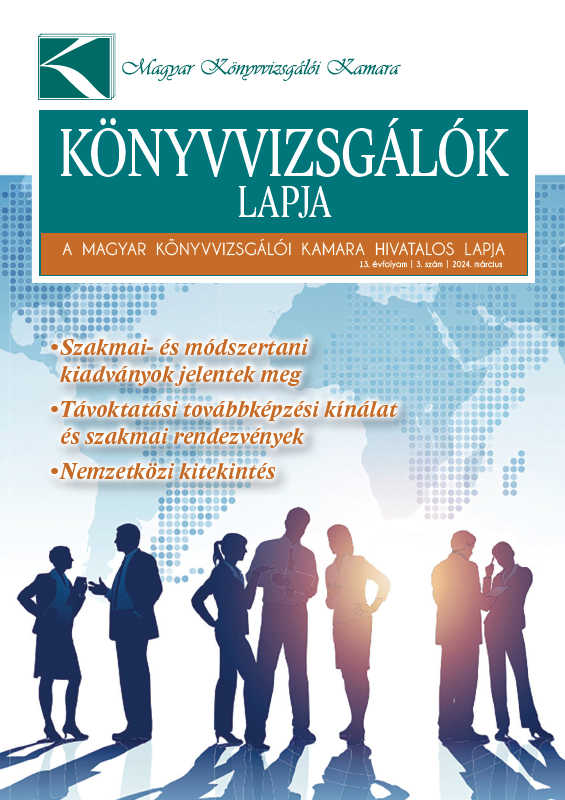 Elérhető a Könyvvizsgálók Lapja legújabb száma. A márciusi számban az alábbi témákról tájékozódhatnak:
- Szakmai- és módszertani kiadványok jelentek meg
- Távoktatási továbbképzési kínálat és szakmai rendezvények
- Nemzetközi kitekintés
A Nemzetközi kitekintés keretében számos összefoglalót állítottunk össze partnereink publikációi közül.
tovább...2024.03.28 16:51
A Magyar Könyvvizsgálói Kamara immár harminckettedik alkalommal rendezi meg az Országos Könyvvizsgálói Konferenciát „A DIGITALIZÁCIÓ ÉS AZ AI FORRADALMA – KÖNYVVIZSGÁLATI INNOVÁCIÓK” címmel 2024.09.11-13. között, amelynek a szokásokhoz híven ebben az évben is a Thermal Hotel Visegrád **** superior nyújt helyszínt.
tovább...2024.03.20 09:29
A könyvvizsgálói közfelügyeleti feladatokat ellátó hatóság felhívást tesz közzé a hatóság által igénybe vehető speciális szaktudással rendelkező közreműködő személyek határozott idejű (2024-2025. évekre szóló) jegyzékébe történő felvételére. A jelentkezés benyújtásának határideje: 2024. április 15.
tovább...2024.03.14 16:15
 A Magyar Könyvvizsgálói Kamara Borsod-Abaúj-Zemplén vármegyei Szervezete a Miskolci Egyetemmel és további szakmai partnerekkel együttműködve nemzetközi tudományos konferenciát szervez 2024. március 20-án.
2024.03.14 09:57
Tájékoztatjuk a tisztelt kamarai tagságot, hogy frissítésre került a KKV könyvvizsgálati módszertani segédlet, melyet a Szakértői Bizottság 2024. február 28-án fogadott el.
tovább...2024.03.08 17:02
A Magyar Könyvvizsgálói Kamara honlapján a könyvvizsgáló szolgáltatók minőségirányítási rendszerével foglalkozó tudásbázis oldalon elérhetővé válik két új kiadvány, amelyek a kis – és közepes méretű társaságok számára nyújtanak segítséget a Minőségirányítási Rendszer (MIR) bevezetésével összefüggésben.
tovább...2024.03.08 15:55
A Magyar Könyvvizsgálói Kamara és a Magyar Okleveles Adószakértők Egyesülete (MOKLASZ), a partner szakmai szervezetekkel közös szervezésben, immár tizenhatodik alkalommal rendezi meg a pénzügyi-számviteli szakemberek legnagyobb országos találkozóját 2024. április 11-12-én.
tovább...2024.03.13 11:06
A kamara szakértői bizottsága ezennel közreadja a „Minőségirányítási kézikönyv egyéni, egyedül dolgozó könyvvizsgálók számára” című kiadványát.
tovább...2024.02.29 10:42
A légitársaságok hozzájárulásáról és egyes adótörvények módosításáról szóló 2023. évi LIX. törvény értelmében módosult a 2007. évi LXXV. törvény (a Magyar Könyvvizsgálói Kamaráról, a könyvvizsgálói tevékenységről, valamint a könyvvizsgálói közfelügyeletről – a továbbiakban: Kkt.). A módosítások a könyvvizsgálók elektronikus aláírási és elektronikus archiválási kötelezettségeit érintik a 2025. üzleti évtől.
tovább...2024.02.27 22:02
Ezúton szeretnénk felhívni a tisztelt kamarai tagság figyelmét, a fegyelmi bizottság által kiadott közleményre. A fegyelmi bizottság tapasztalatai alapján szükségesnek tartja összefoglalni a könyvvizsgálók társasházi feladatvállalási lehetőségeit, azok fontosabb előírásait, az egyes feladatkörökhöz kapcsolódó könyvvizsgálói feladatokat figyelemmel arra, hogy valószínűsíthetően jelentős számú könyvvizsgáló vállal el társasházi feladatot.
tovább...